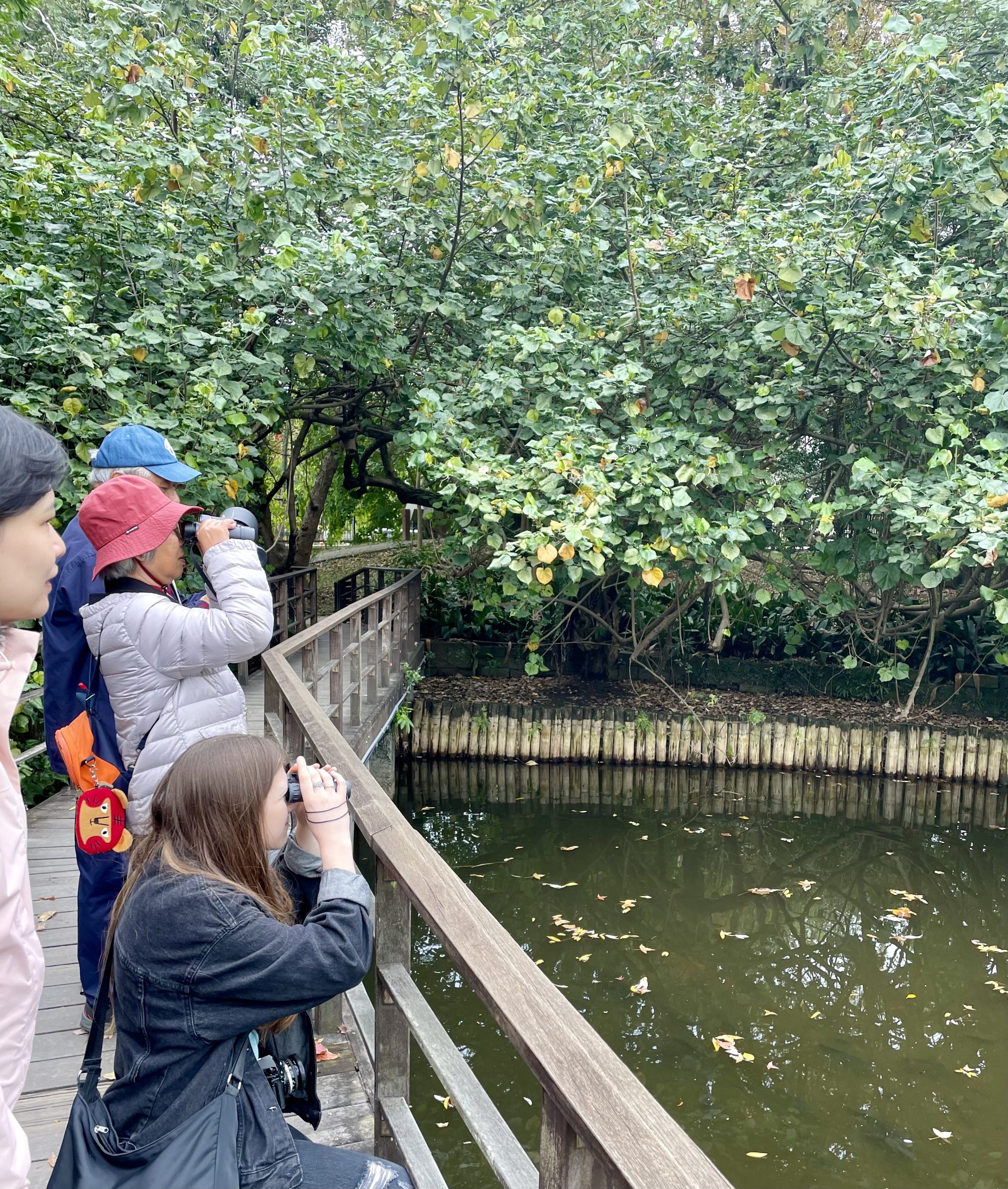
In our post-pandemic year of 2026, many of us carry an improved ability to notice our noticing. We’re getting better at noticing the signs that we need rest. We’re getting better at noticing the needs of our neighbors and the birds on our fire escape. We’re getting better at noticing that there is a lot of rewriting, reconciling, and rebuilding that needs to be done, and that we, on many levels, must be a part of it.
However, 2026 has already given us plenty of reasons to feel like our ability to notice might just be what breaks us. If we read one more article about a child killed by a childish man’s bomb. If we scroll upon another video of a racially motivated police encounter. If we see another tree ripped up to build a luxury rental property. If we look too closely at the skin on our aging parent’s hands. We just might burst.
In many ways, I think our survival depends on our ability to notice. It is critical to know what is going on around us and to stay connected to our community. It keeps us human, and there are real ways we can help. At the same time, I’m learning how to gently take my noticing for a walk in the park. A walk where I have but one objective: to notice the birds.
Many of us can recount personal experiences of the various hobbies and heartbreaks that shaped us circa 2020. Birding was one of those for me, as I know it was for many. My grandmother kept a bird feeder outside of her window at the nursing home. She’d always been attuned to nature. A view with trees was a non-negotiable among her nursing home search criteria. When she passed, we moved the feeder to my parents’ house, where I was staying at the time. Amidst societal stillness, the variety of birds flocking to that feeder, just outside the front window of the home I’d grown up in, was like nothing I’d seen (or rather, noticed) before. Cardinals, Sparrows, Finches, Blue Jays, Mourning Doves, Chickadees, Titmice, Cowbirds, Red-bellied woodpeckers (which I determined look like my now husband with their fiery red/orange cap), and many more. I recall my brother noting, “It’s wild to think we know the names for so many different mammals, but when it comes to the bird species, we can name so few.” That was an interesting thought. I decided during those days spent observing local avian behavior that these creatures had much to teach me. My love for birding had broken through like a freshly hatched chick!
As my attention to feathery matters has grown, I’ve learned to measure the health of my nervous system on any given day by my ability to tune into the birdsong around me. If I walk right past a bird without acknowledging its presence, I probably need to slow down. My mind is likely caught in a place too far from the present. There’s even science behind the exchange, with studies showing birding can boost mood and lower blood pressure. The practice forces you back into your body, paying attention to each sense and appreciating that we’re a part of something bigger.
Recently, our CEO at MORTAR and a cheerleader of my birding journey, Allen, asked me what my “goal” is when I am birding. While there are certainly times when I am curious to see something specific, especially if in a new place, the majority of my birding hours are spent simply noticing. This act of being present requires focus, curiosity, attention to detail, and stillness. A welcome change from the pace at which I may exist otherwise.
Some of my favorite moments as of late have been spent on benches in various parks and yards. I take my noticing by the hand and go for a walk. Binoculars around my neck. Journal at the ready. Finding a nice place to sit still for a while. Choosing to pay attention to these chirping, singing, hopping, soaring, rustling, dancing, digging feathered-friends. The world is complex and curious, I remember. So are the birds. So am I.
I don’t find that birding is a means of escaping reality, rather an essential practice for me to face the world more fully. It tunes me into a different order of things happening all around us. One that is ruled by abundance, instead of scarcity. By cyclical journeys, instead of strictly linear gain. Sure, there’s still a bit of healthy competition. Yet at the same time, a mutual assurance that earth’s gifts were meant to sustain us all, down to the ladybug now sitting with me on the bench. In this order, I find it much simpler to hold the notion that more than one thing can be true at once. That the world can be both breathtakingly beautiful and downright difficult. While sitting with the birds, I am finding the permission to dream, inspiration to create, and ability to be awed. I am rightly seeing myself as part of a larger ecosystem. One where my actions, or lack thereof, matter much and yet, are held within a web much larger than myself, one that I cannot and should not singlehandedly control.
In my role of shaping space and opportunity for entrepreneurs at MORTAR, I frequently ask myself how this order of things can guide my work. What happens when we see our businesses and entrepreneurial dreams as part of a deeply connected ecosystem? What happens when we maintain an awareness that our own thriving cannot be detached from the thriving of the community? What happens when we build with patience, intention, and care? What happens when we lead with abundance, taking what we need and passing along our surplus? What if we felt more awe toward the people and places around us?
I’m grateful to work in an environment that values personal hobbies and encourages us to take care of ourselves. Our team began reading a book together this year called Less is Liberation. In it, Christine Platt offers a valuable framework for nurturing our personal wellbeing based on five “wells”. She categorizes these wells as physical, mental, emotional, social, and spiritual. I must say, my bird walks are one of the surest ways to fill my wells these days. My work is certainly better for it.
May your wells be filled this Spring. And if you’re curious about the birds, download the Merlin app, take it outside, and have some fun!

Lexie Grimes
Building Operations & Experience Manager